
Artist of Life
Art Imitates Life or Life Imitates Art (written in 2020)
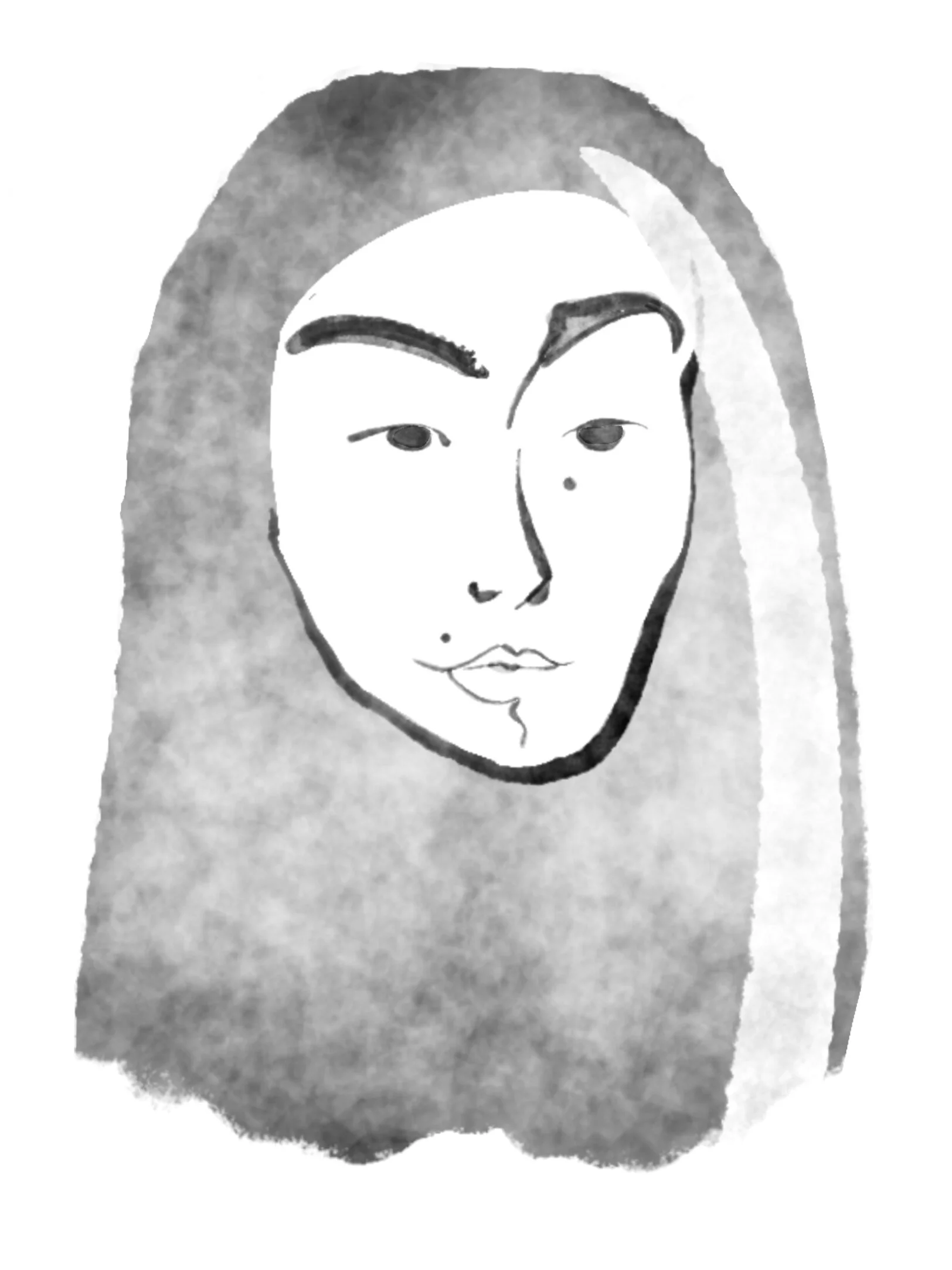
© AMEDARA Portrait, watercolour by Larizza Lopez
“I am an artist of life.”
When someone asks me to describe who I am this is the expression I often find myself reverting to. Innocent enough as it may seem it leaves the inquisitive to delve in or retreat.
Drawing from the sayings, “art imitates life” or “life imitates art”.
Its a window into the many colours of my life.
However, not knowing the true origins of these lines didn’t give depth to my claim. I like my words to carry weight.
What was my life in relation to art, aside from being a lover of the arts?
The natural process of introspection and contemplation had to unfold. It was good to examine the madness through my meditations and do the research.
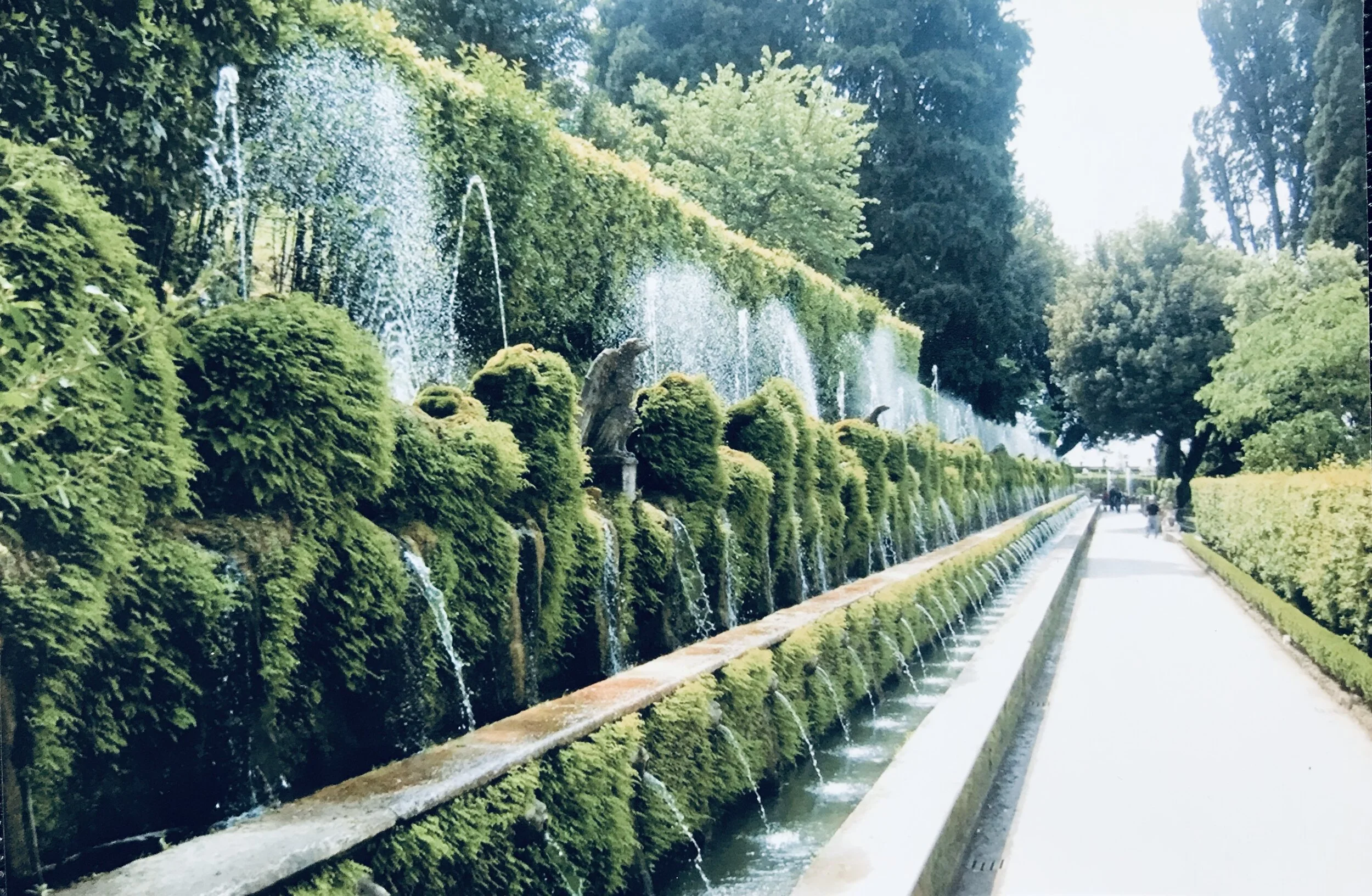
Villa d’este, Tivoli, Italy
Real and Abstract
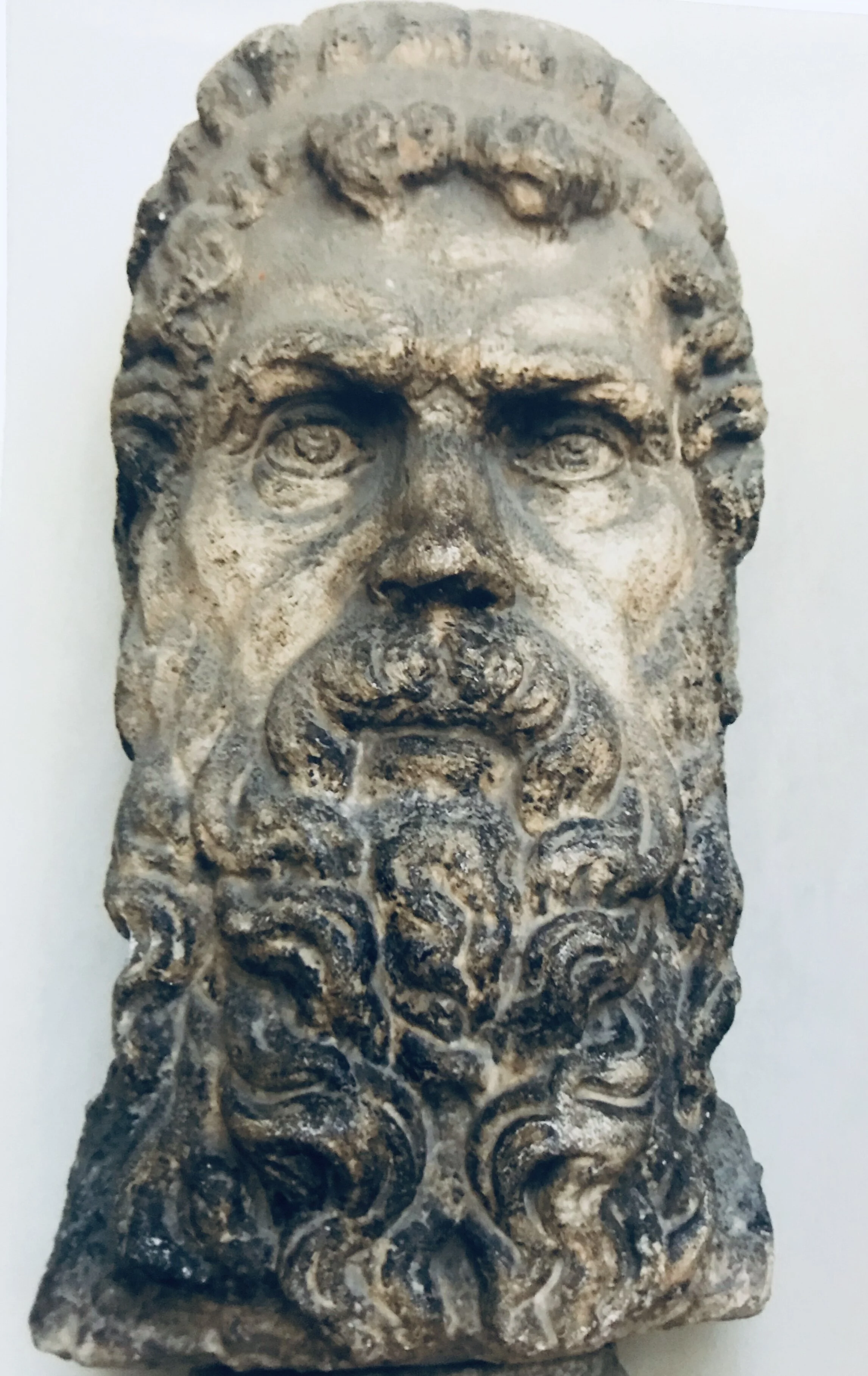
Unknown Man, Villa d’Este, Tivoli, Italy
I had read Aristotle’s Poetics.
Initially written as a literary guide for poet and prose Aristotle’s philosophy on mimesis (imitation) shows us the emphasis of realism when using art and its relation to nature, to life.
“The poet being an imitator, like a painter or any other artist, must of necessity imitate one of three objects,--things as they were or are, things as they are said or thought to be, or things as they ought to be.”
The artist should be honest in portraying an object, place or person in true likeness because it’s how we learn and remember.
“First, the instinct of imitation is implanted in man from childhood….through imitation learns his earliest lessons; and no less universal is the pleasure felt in things imitated.”
“Art imitates life” is born from Aristotle’s Poetics.
Twenty-six chapters read over and over again to get familiar with when and how it was written. Understanding his manner of expression allowed his point of view to finally sink in.
Intimate experiences with ourselves, others and nature can be felt universally. Stopping to smell the flowers, tasting your favourite dish, listening to a particular piece of music, gazing up at the stars or into the eyes of someone you love. Making love.
Realism through any artistic medium - music, literary or visual can provide an experience without outside influences. We get to see, feel, know that object, place or person’s natural raw beauty and power. Aside from the artist’s personal style, what is given does not lie. It is what it is.
"…the example of good portrait-painters should be followed. They, while reproducing the distinctive form of the original, make a likeness which is true to life and yet more beautiful. So too the poet, in representing men who are irascible or indolent, or have other defects of character, should preserve the type and yet ennoble it.” - Poetics, Aristotle
In Oscar Wilde’s Intentions, his essay The Decay of Lying was more familiar in a sense. The language easier to understand because of the time, and because it was written as a dialogue between two people I found it more engaging and immediately understood.
I appreciated that Wilde had written it in such a way. This is where “Life imitates Art” came to be.
Through Vivian’s voice she says,
“Life imitates Art far more than Art imitates Life”
“Life holds the mirror up to Art, and either reproduces some strange type imagined by painter or sculptor, or realizes in fact what has been dreamed in fiction.”
Wilde views the opposite to Aristotle and states his claim against him in his essay. It is the artist that chooses or influences what we should see. To show life in true form or not. Even if what we initially see does not look ‘real’. It is about the separate pieces put together as a whole. Not one point of focus.
His view was more abstract.
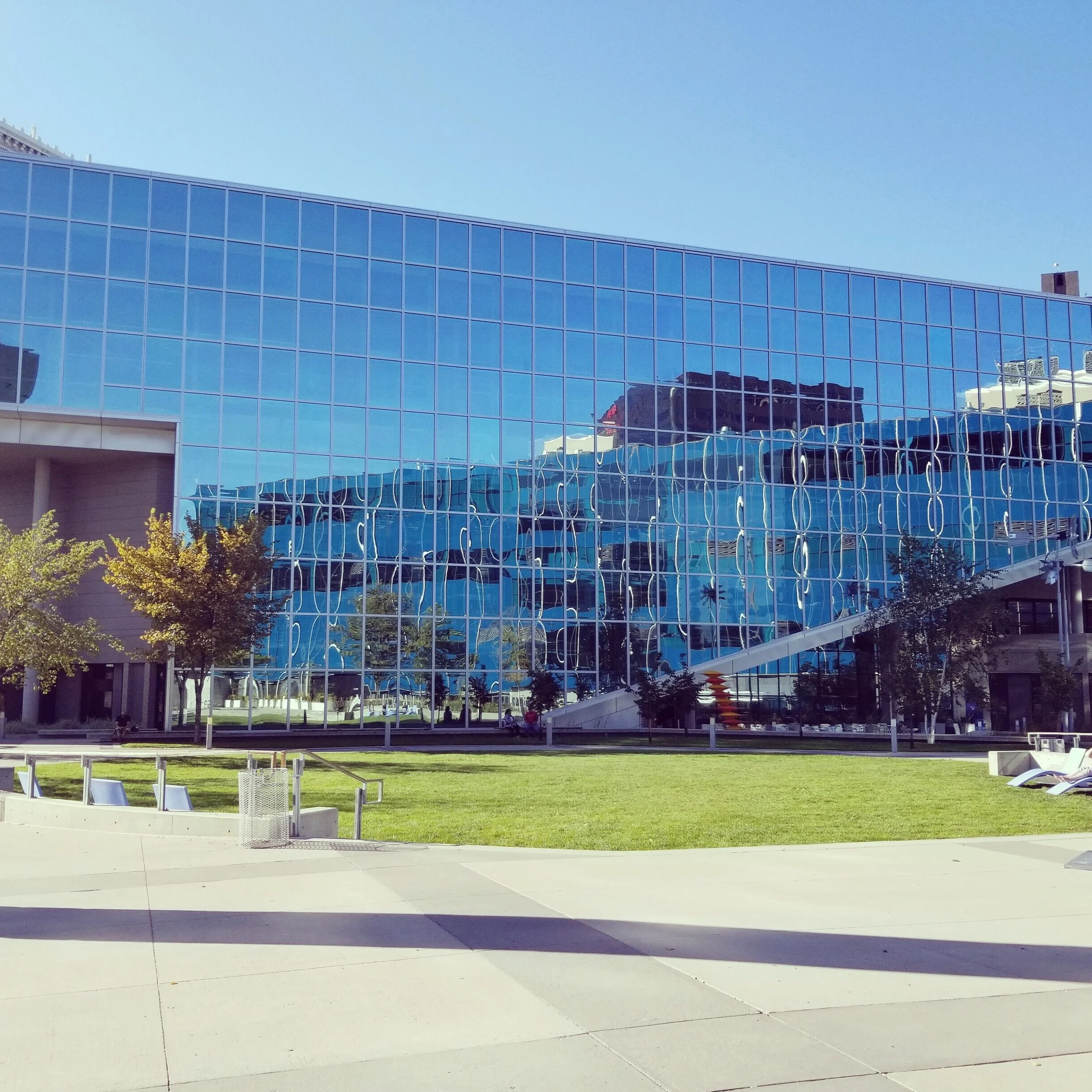
Millenium Library, Winnipeg
The Sky Lit Up
I had been to Paris and Rome to learn all there was to art and experience life in a new way. Seeing paintings, sculptures, and architecture in person could not compare to what I knew of them in books and the affordable prints I could find in the art store. I appreciated them for arts sake but not particularly attracted to them for my own.
When I first looked up at the ‘sky’ of the Sistine Chapel I remember feeling pierced. Like a lightning bolt through my eyes. I was in utter awe of how these artists, these people could create such magnificence. Many frescos by brilliant artists put together as a whole painstakingly done over many years.
Michelangelo Buonarotti’s ‘The Creation of Adam’ left me speechless. The reproduction of man over and over was beyond comprehension. The realism in form was so honest but because of the distance in view you could not see the details, and I don’t think Michelangelo wanted us to see just the details.
His view of god and creation was more than him, than us.
‘Thy will be done on earth as it is in heaven’ - from The Lords Prayer
There were abstract spaces between the figures, left to the individual to unite them together. Only this way could the sky light up.
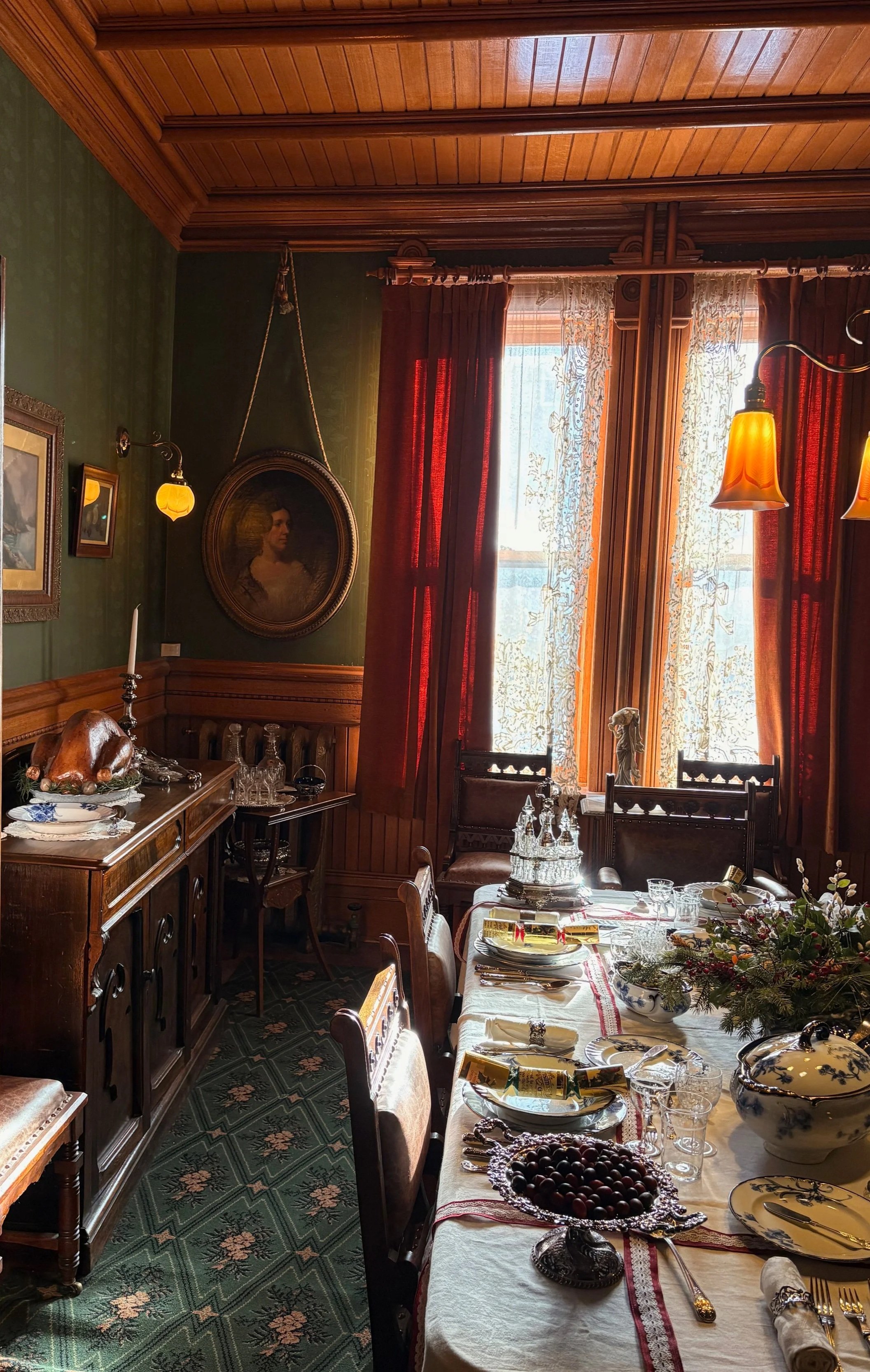
Dalnavert Museum, Winnipeg
“I met at a reception at the house of one of the Foreign Ministers a woman of very curious exotic beauty. We became great friends, and were constantly together. And yet what interested me most in her was not her beauty, but her character, her entire vagueness of character. She seemed to have no personality at all, but simply the possibility of many types.”
- The Decay of Lying, Oscar Wilde
Mona Lisa’s Hands
At the Louvre in Paris, I remember standing in front of ‘her smile’ and feeling bewildered by the star-struck tourists as they clicked their cameras.
It wasn’t a piece I was particularly attracted to, my ignorance to it was on purpose as I could not understand what the big deal was. So I stared and took her into me, and in a flash I realized Leonardo da Vinci did something not just with her smile or her missing eyebrows.
It was Mona Lisa’s hands that got me.
I stood there silent, immune to the tourist paparazzi, looking down at my hands to find it clasped in the same way like hers, as if I was her. Why I was moved by how he portrayed them haunted and humbled me. After that experience, I never looked at hands the same way. If anything, it enhanced my sense of touch.
I did research on it later and found I was not alone with my observations. There was something in the separate pieces, the landscape around her, that made her elusive, not the mystery brought on by the debates of others.
Da Vinci brought me in just as Michelangelo brought me out.
What these artists did was give me an unequivocal experience. A place where I could could focus, and expand my view.
To unite and elevate my senses beyond the paint, beyond reason.
Truth Be In Art
Leo Tolstoy offers a bridge in The Kingdom of God is within you. What is Art?
“Art is the uniting of the subjective with the objective, of nature with reason, of the unconscious with the conscious, and therefore art is the highest means of knowledge.”
I will add that life is full of metaphors. Full of symbolism. Life contradicts.
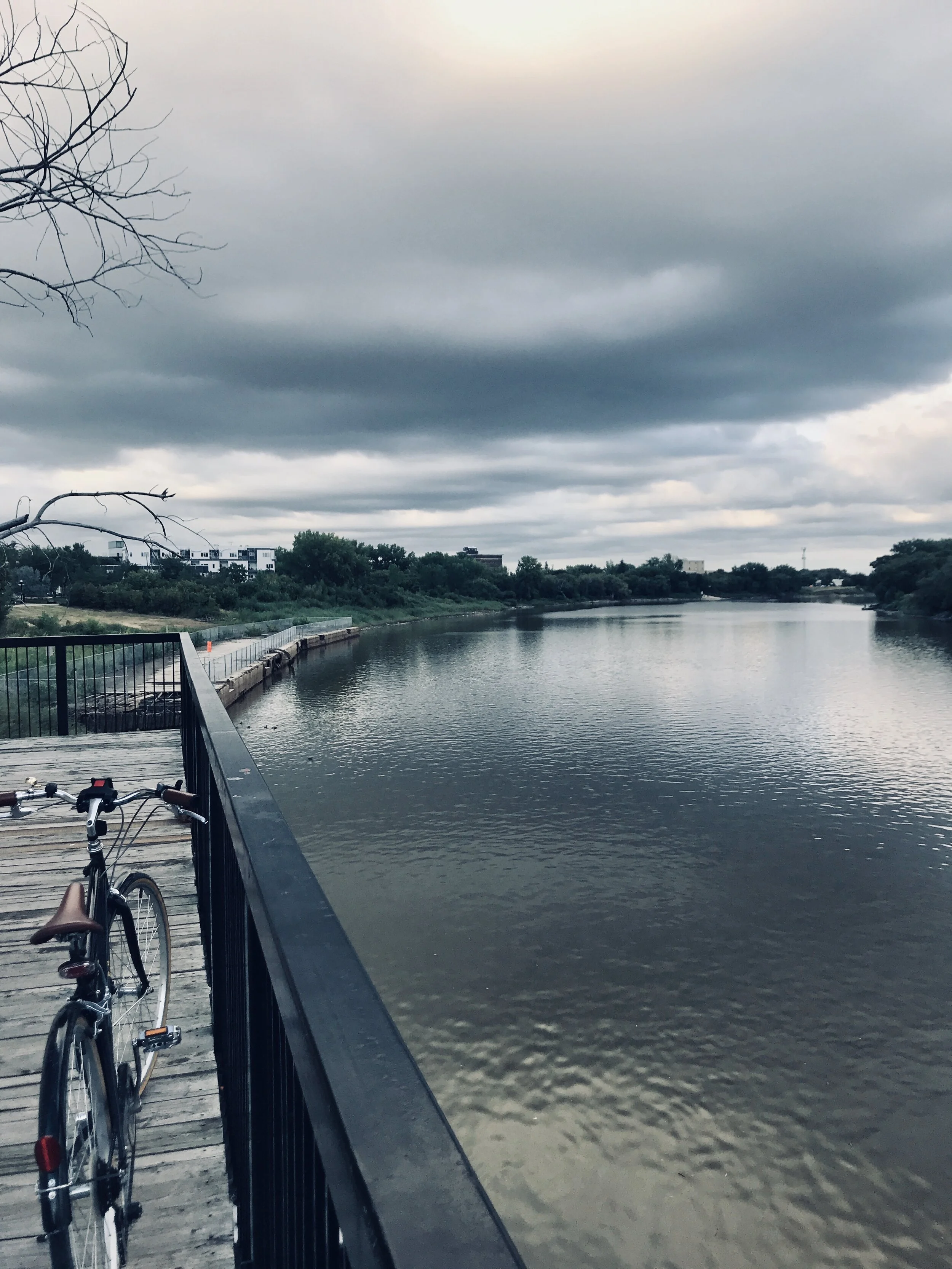
On the Red River with Sagres
This is the reason why art is so important. To document, to focus on, to unite the many pieces that life brings us.
Art reminds us of our innocence to the grand scheme of life.
Paying attention to the finer details with art and life is equally important as colouring outside the lines.
What would become of you if you drew new forms in the empty spaces in your life? Or repainted over parts you didn’t like? You could enhance or build on it, or simply tear it down. Start again. Or let it be.
Why must one belong to just one philosophy when we are innately comprised of many?
The belief systems we hold on to can limit our growth and cut off our senses. We often choose what is safe and familiar, because we are conditioned to, or simply choose not to go beyond the paint.
If you believe that art is subjective, then truth is subjective as well.
The truths I held in my twenties are not the truths I hold now in my forties. If I’m fortunate enough to be a centenarian, I’m pretty sure my views on life will have changed to some degree, and would like to think they’d be more simplified and doesn’t require an essay.
I, like Tolstoy, had to go through war to find peace. Often taking the road less travelled. Allowing myself to love all too much, over and over again.
But through the tangible and illogical it brought me enlightenment.
“Pure and complete sorrow is as impossible as pure and complete joy. “- War and Peace, Leo Tolstoy
Aristotle, Wilde, Michelangelo, da Vinci and Tolstoy all spoke the same language in different ways.
We all do.
“Art imitates life” AND “Life imitates Art”. It’s one in the same.
I would encourage you to meditate on who you are in the canvas of life.
Embrace the physical and the non-physical and go with what pulls you. Challenge yourself to not be complacent in life.
Draw from your history, your experiences and allow yourself to open that door to living.
Your palette can be bright, colourful, dark and invisible.
You choose what colours should go on your canvas. To be seen or not.
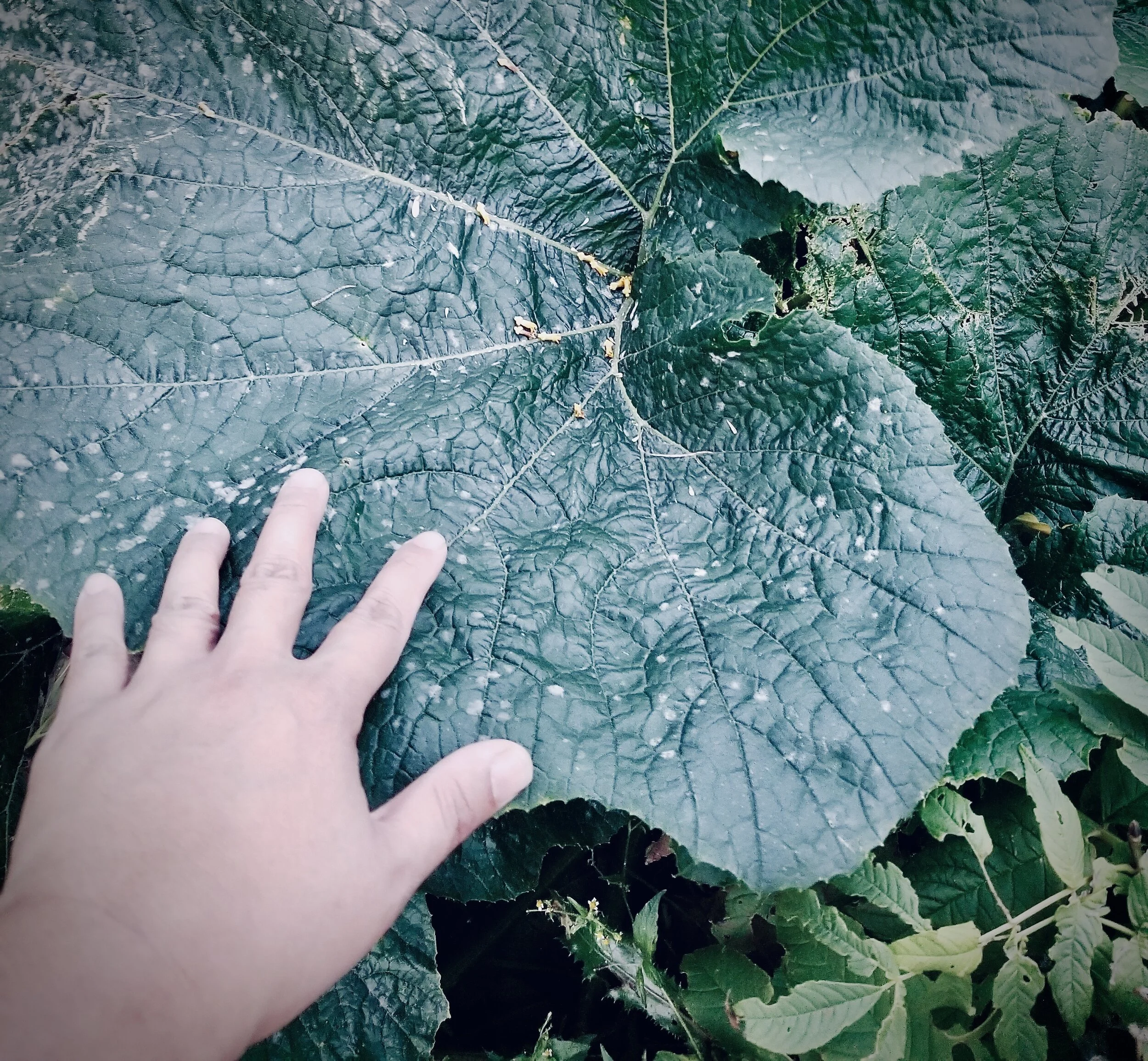
My Eden
We are all artists, painting life as we go.
Reference Book Links from: